


Where is that confident momentum now? What has happened to the big cast iron pot? Impossible as soon as there were two children to be contained: one screaming to be fed while the other staged a coup in the actual middle of the road. This phase of motherhood has instead been characterised by her own novel parenting concept, ‘desperate hedging,’ one that is strangely not celebrated anywhere on the blogs: a grotesque melee of pleading, cajoling, and assuaging, with the odd outburst of helpless rage.
In 1927, Virginia Woolf published To the Lighthouse, an incredibly successful foray into the stream-of-consciousness genre of modernist literature. I have to admit I suffered through my required reading of TTL in high school, but as a slightly wiser and more seasoned adult, I’d like to revisit it. I’m sure I’d get more out of it this time around. From a purely scholarly perspective, I can appreciate now how it played with narrative and point of view, and its consideration of Mrs. Ramsay’s tenuous place in Edwardian family life and her own inner landscape.
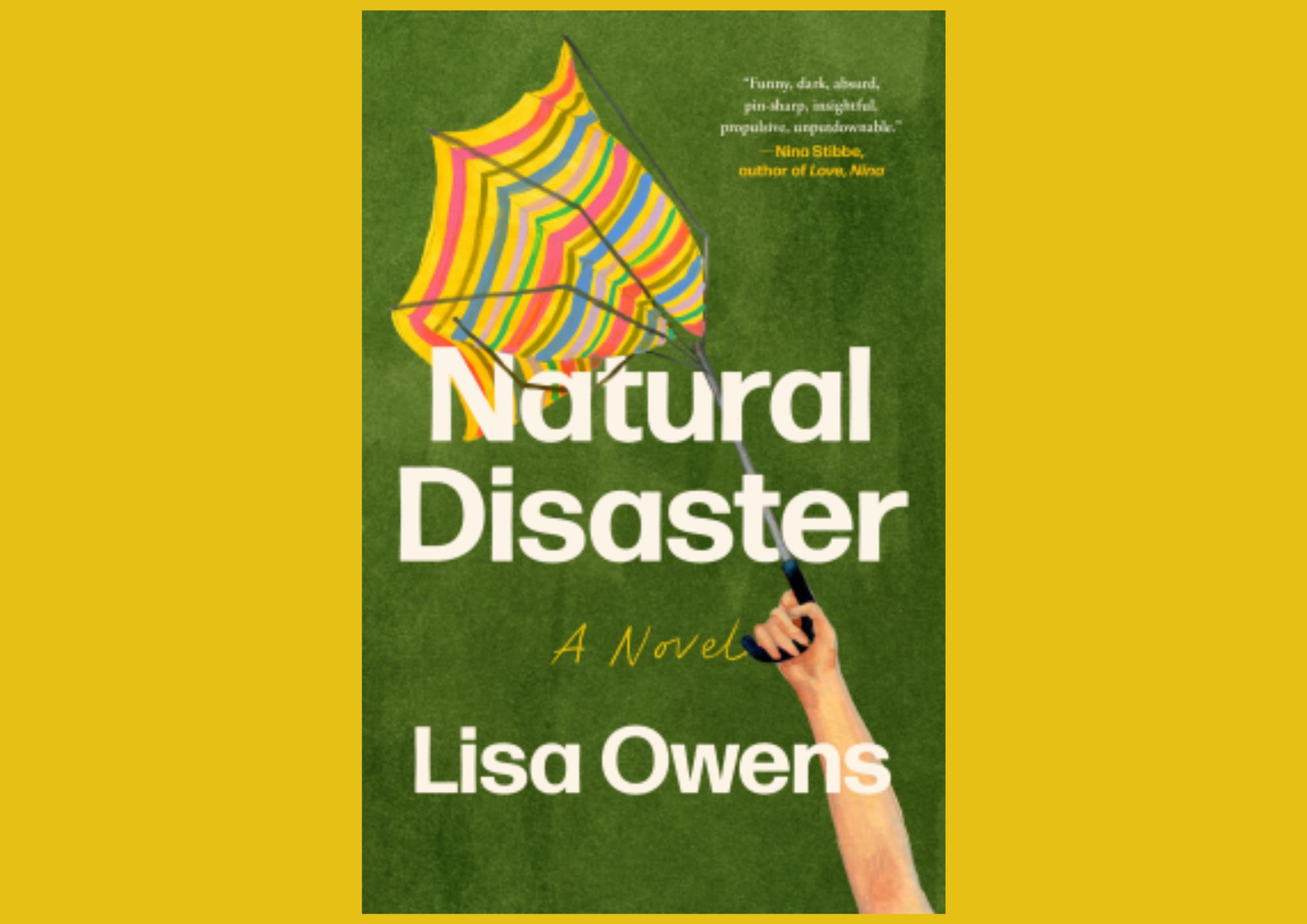
I thought often of TTL as I submerged myself in Lisa Owens’ second novel, Natural Disaster.1 (I am not the only one to compare Natural Disaster with Virginia Woolf’s work. Jessie Thompson’s insightful review, with allusions to Mrs. Dalloway, incorporates Owens’ personal experience with career gaps, stay-at-home-parenting, and creativity, while Owens’ own essay for The Guardian touches on the great importance of domestic literature.)
I had very little idea of what to expect; The Pom received a complimentary advance copy from Little, Brown in exchange for an honest review, and I knew that it was about a mother of small children about to return to work after maternity leave. On this knowledge alone, I snapped the book up. So few contemporary novels, I have lamented often to friends, deal with the nuts and bolts of early motherhood. Those that do so in a modern setting often feature it as a secondary aspect of a larger story, such as Gillian MacAllister’s thriller Famous Last Words. Deeper dives into the psyche of mothering often take place in historical fiction, such as Nancy E. Turner’s award-winning These Is My Words, set in the late-19th-century Arizona territories. But the nitty-gritty everyday of disposable diapers and microplastics and screen time and trying to balance everything that is required of the twenty-first-century mother? That sort of story is harder to come by.
It is into this literary moment that Natural Disaster tumbles, riding full tilt in a double stroller, capturing both heart and neuroticism. I texted friends while I was reading it, that I was caught between feeling unable to put it down while also needing to take breaks: Owens’ central character felt so alive, so real and so connected to my own experience parenting two tiny chaos boys that I had to stop occasionally and remind myself that I was not actually living in her breathless world.
Repair. She has read about repair being the thing, the key, the determining factor in secure attachment, but there is less about how to manage the consistent, low-level rumble of certainty that she’s a monster, a terrible hypocrite, perhaps even the worst mother in the world. How else to explain such wildly negative responses to perfectly quotidian interactions like snack time?2
In the tradition of Daphne du Maurier’s much-beloved Rebecca, the main character is never named. At first, I worried I would not be able to relate to her, or that she would not be a fully formed person. I was glad to be wrong. Her identity has been swallowed up in the meticulous care of her two small sons, but even as her every action is devoted to them, she never quite feels as if she is doing, or being, enough. As the publisher’s blurb summarizes:
The mother of the novel has one more day of maternity leave. She’s determined to make it special. Her husband is out of town, but she won’t be cowed by the prospect of solo-parenting her toddler and infant. The Three Musketeers, as she secretly calls herself and the boys when their dad is away, will make a victory lap of all their favorite destinations–the library, the park, the cafe. She will be present. She will prepare healthy meals, and her sons will eat them. She will enjoy these last precious hours devoted to her children.
Of course, as any parent could predict, nothing goes as planned. The hours pass, small catastrophes accumulate, messages from her husband and ill-fitting work clothes torment her, self-doubt and guilt take hold. Finally, her day of celebration becomes a race to keep her children safe through the night.
The mind of a mother never stops, as I wrote in 2024. It is hard to explain to another person, even harder to replicate on paper, and yet somehow Lisa Owens manages to do it. Even better, she manages to be funny, a trick challenging to attempt and even harder to pull off when one is writing about toddlers and stress. Yet the book is not silly; the humor with which Owens infuses her prose makes the moments of heartbreaking truthfulness stand out in greater relief.
“She grips his hand, wondering, as she does every time the most trifling rebuff happens, whether she has what it takes to see this thing (motherhood) all the way through.”3
It would have been so easy for a novel that grapples honestly with motherly rage, sleep deprivation, and marital tension to be bleak or bitter. I worried, just a bit, as I opened it up, that this would be the case. Again, I was relieved to be wrong. The narrator’s love for her children and courage in the face of fright are heartwarming, not depressing. I won’t spoil the plot for you, but I’ll say this: I was left feeling as though someone had split me open, read the thoughts I did not even have language to express, and wrote them down. I found myself wishing the mother in the novel was a real person whom I could talk to, commiserate with, and perhaps even hug.
Instead, I will send that energy to the mothers around me. Perhaps you, who are reading this. I see you.
Also, I found myself sincerely coveting the U.K. policies on maternity leave, childcare, and emergency health services. As an American reader, the thought of a year of paid time for parental bonding brought a tear to my eye. Maybe public policy that takes care of parents isn’t natural, but perhaps it ought to be.
‘Childbirth is the most natural thing in the world,’ the antenatal class leader had said, reassuringly, but afterwards she understood it was the kind of double-speak she herself had learned to use when answering Felix’s difficult questions, telling part of the truth while using that same truth to mask the whole truth’s brutality: ‘natural’ could mean ‘rainbow’ but it could also mean ‘wildfire.’4
Natural Disaster is on sale5 now.
Want to read more novels of motherhood? I recommend Today Will Be Different (another domestic story set over the course of just one day!) and Where’d You Go, Bernadette? by Maria Semple, as well as Remarkably Bright Creatures by Shelby van Pelt, Happy People Don’t Live Here by Amber Sparks, Little Fires Everywhere by Celeste Ng, and Finlay Donovan is Killing It (first of a series) by Elle Cosimano.
I do not recommend Yesteryear by Caro Claire Burke, and you can read my further thoughts on that book here.
Follow The Pomegranate on Facebook, Instagram and Bluesky for more, and join our subscriber chat here on Substack. If you enjoyed this post, please forward it to a friend! Interested in writing for us? Check out our submission guidelines.
The opening quote to this review is taken from page 131.
Owens, 47.
Owens, 33.
Owens, 72.
As a Bookshop affiliate, we are eligible to receive a small commission if you choose to purchase using this link, at no additional cost to you.
I loved it